5 min· investing
Saying no fast is the kindest thing an investor does
Three founders, asked independently what they valued about working with us, all said the same thing. It wasn't the money or the advice.
When we collected testimonials from founders and co-investors, nobody was asked about speed. Three of them raised it anyway.
Able Joseph at Aisle: "we closed the round within a week and were over-subscribed... Vinod is super responsive and often takes decisions quickly. This is important for under-resourced, early-stage companies, for whom all matters are time-sensitive."
Arjun Pillai, who founded two companies we backed: "I had one face to face meeting by the end of which Konglo had pretty much made the decision... I have seen Konglo almost always makes quick decisions whether it is Yes or No. I think this is one other aspect which every investor/fund should try to emulate."
Viren Bhushan, investing alongside us: "ease and flexibility of investing... but also in terms of speed of decision making from the Konglo team."
Arjun's point is the one most investors miss: whether it is Yes or No.
The maybe is the expensive one
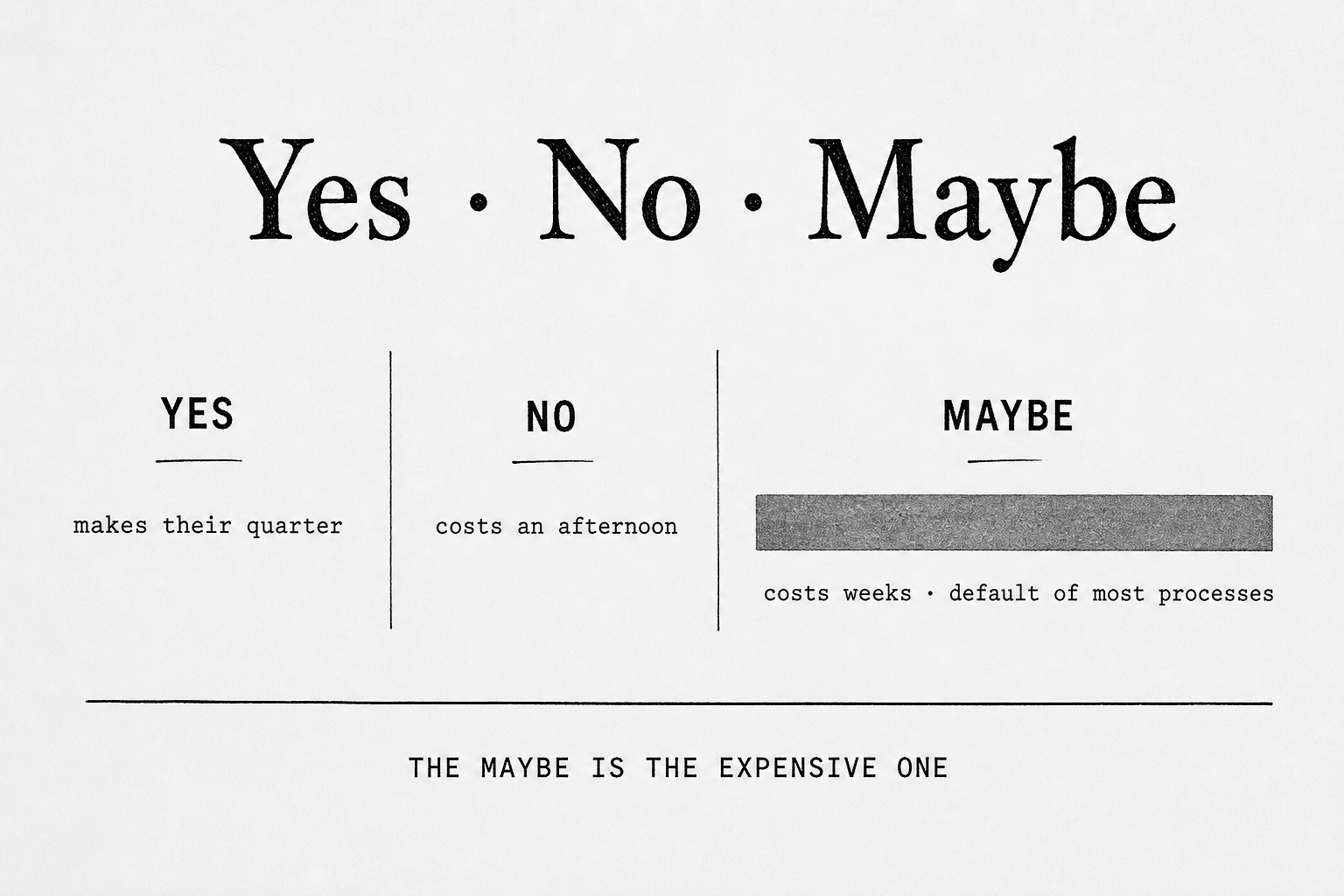
A no costs a founder an afternoon. A yes makes their quarter. A maybe costs them weeks, and it is the default output of most investment processes, because a maybe is free for the investor and keeps the option alive.
The founder pays for it. They are re-forecasting runway around a probability you have not given them. They are declining to pitch someone else because you are "still looking at it". They are managing a process instead of building.
What the process was
I described it once, in 2020, and it hasn't changed much:
Pitch deck review. A pitch call (one to one, or with my partner, or with a broader group of co-investors). Internal discussion, including feedback from market and technical experts. Further rounds of discussion and grilling with the founding team. Sleep on it. An intense discussion with Anas. More sleep. Then call the founder with the decision.
Origination to money in the bank ran one to four months. The investment decision itself usually took no more than two to three weeks.
Two things in there matter most. First, sleep appears twice. Second, the last step is a call: you tell them yourself, rather than letting the process fade out.
Why speed is possible at all
What makes speed possible without being careless is having decided in advance what you are looking for. If you know your criteria (a large problem, a strong founding team with complementary skills and real skin in the game, some validation of the model), then most decisions are quick because most companies are clearly not that.
The slow processes I see are usually slow because nobody has settled the criteria. So each deal gets re-argued from first principles, and the debate is really about the fund's identity rather than the company.
Where it cost me
There is another side to this. A piece where three founders praise my decision speed and I agree with them is not worth reading.
CareOnGo, which became Ovohealth, went from first call to investment in one week. It is on my portfolio page now, struck through, as one of four write-offs.
In that case speed was the problem. We rushed it. We skipped steps of a process we had already run, and told ourselves afterwards that moving fast was the point.
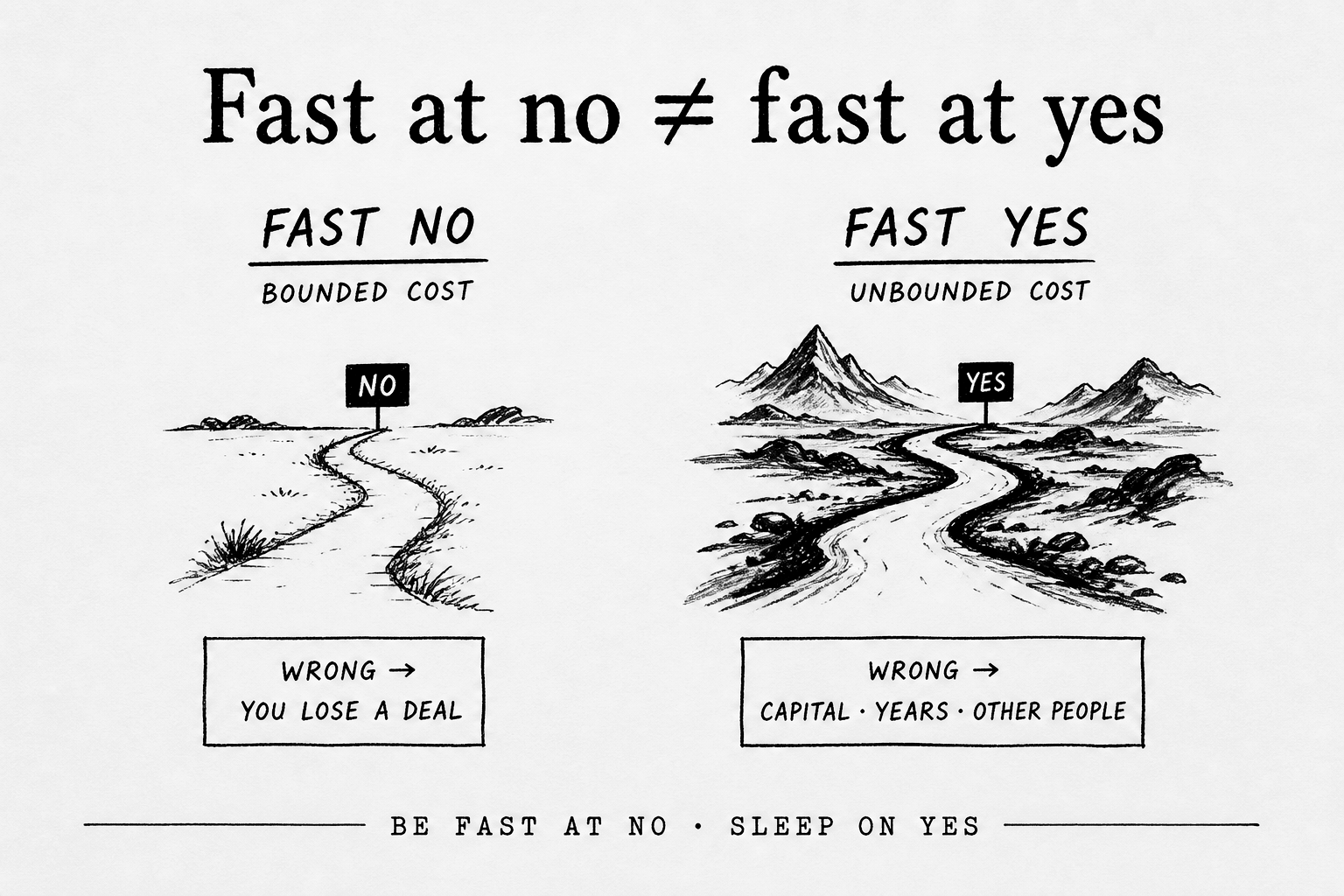
I had this distinction wrong for years, and it was sitting in the title of this piece for a long time before I noticed it. A fast no and a fast yes are not the same risk. If you say no quickly and you are wrong, you lose a deal you will never hear about again, and the founder loses an afternoon. The cost is almost entirely yours and it is bounded. If you say yes quickly and you are wrong, you have committed capital on compressed information, taken a position on someone's cap table, and made a promise you now have to keep for years. The cost is unbounded and most of it lands on other people.
So the argument in this piece is narrower than "be fast": be fast at no. Being fast at yes is a different decision that happens to take the same amount of time, and it deserves the sleeping-on-it that our own process was supposed to include and that we skipped for CareOnGo.
Aisle closed in a week too, and worked. I cannot give you a clean answer, ten years on, for what separates the two. What I can tell you is that with Aisle we had already answered our criteria before the week started. With CareOnGo we answered them during it, which is not the same thing at all.
The rule
Give founders a decision at the speed you would want one. If you cannot get to yes, get to no, and say why. You will get better dealflow from the founders you turned down than from most of the ones you backed.
When a yes comes that fast, check that the criteria were answered before the conversation started, and if they were not, sleep on it.